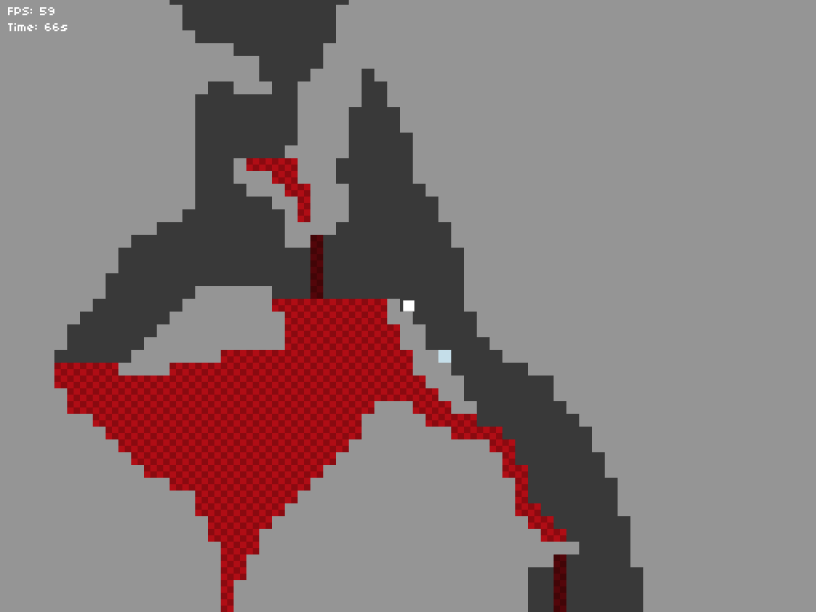
When learning C++ I decided to remake my Platformer that used Dark Basic. The previous version had issues with its frame rate and the physics was implemented in a way that forced it to update each frame, meaning that frame drops would slow down the game itself too. For a game where precision matters and a timer is tracking your best completions, frame drops and slowdowns are unacceptable.
To remedy this, I decided to look into proper game loop logic and found several articles on fixed, partial-fixed and variable time step loops. I decided to use fixed as it was the most similar to my previous physics implementation and because I wanted to add replays into the game. While it is great to be able to say you had a good time on a level, to be able to see that good time and all the tricks used to get it, would be an amazing addition.
I transferred the physics over to the new implementation and re-created the aesthetic and game logic within C++ utilising Object Oriented patterns instead of Imperative method calls.
Now the platformer runs at much higher framerates and can save and load replays of levels too.
 James Kime Portfolio
Comments are closed.